
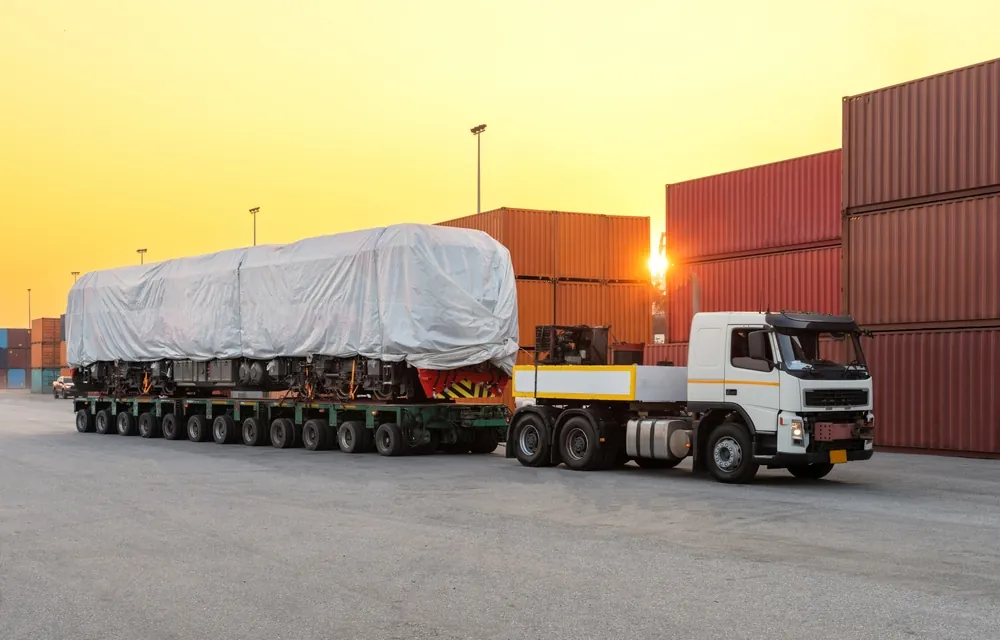
Heavy Haul Shipping: Oversized Freight Transport Made Easy
Find the trailer, route support, and rate option that fit your oversized or overweight shipment.
FreightCenter helps determine whether your load needs a flatbed, step deck, lowboy, RGN, or another open-deck configuration based on its loaded dimensions, weight, ground clearance, and loading method.
Plan the Right Open-Deck Shipment
Truckload Freight Services Flatbed Freight Shipping Service Removable Gooseneck Trailer Lowboy Trailer Shipping


Heavy haul planning starts before a carrier is selected. A machine that can drive onto an RGN may have very different equipment and loading requirements from equipment that must be lifted by crane. Loaded height, axle weight, pickup access, and delivery access can also change the trailer and route options available. Create an account to keep documents and shipment information organized when heavy load transport becomes repeat business.





Thousands of businesses trust FreightCenter to move their freight faster, smarter, and cheaper! From unbeatable rates to top-notch service, our customers are raving about their shipping success.
See why they keep coming back!
Award-Winning Service, Trusted by Shippers Everywhere!
- 2021, 2017 & 2016 Food Logistics’ Top Green Providers
- 2021 & 2018 Supply & Demand Chain Executives’ Pros to Know: Matthew Brosious
- 2020 & 2019 Top Food Logistics’ 3PL & Cold Storage Provider Award
- 2020 & 2019 Business Observer’s Top 500 Companies on the Gulf Coast
- 2020 & 2017 SmartWay® Transport Partner
- 2020 & 2017 Food Logistics’ Champions: Rock Stars of the Supply Chain
- 2020 Best of Palm Harbor Awards for Local Businesses
- 2017 Green Supply Chain Award from Supply & Demand Chain Executive
- 2017 Tampa Bay Business Journal Heroes at Work
- 2016, 2015, & 2012 Food Logistics Top 100 Software and Technology Providers
- 2013 Tampa Bay Business 100 by Tampa Bay Business Journal
- 2013 Top 100 Great Supply Chain Partners by SupplyChainBrain
- 2012 TIA Samaritan Award Honorable Mention
- 2012, 2011 & 2010 TBBJ Fast 50 Recipient
- 2013, 2011, & 2010 Diversity Business Top Businesses
Why Choose FreightCenter for Heavy Haul Shipping?
Heavy haul shipping requires more planning than choosing a pickup date and destination. The size, weight, loading method, trailer type, route, and delivery site can all affect how the shipment needs to move.
FreightCenter helps you compare heavy haul options based on the actual requirements of your load.
- Trailer Matching: Compare flatbed, step deck, lowboy, RGN, and other equipment based on the freight’s dimensions, weight, and loading method.
- Route Planning Support: Account for road restrictions, clearances, and other route considerations before the shipment moves.
- Permit and Escort Coordination: Identify oversized or overweight requirements that may call for permits, pilot vehicles, or additional planning.
- Carrier Comparison: Compare available heavy haul carrier and rate options for the lane and equipment required.
- Pickup and Delivery Planning: Confirm loading equipment, site access, unloading conditions, and other details that could affect the move.
The more FreightCenter knows about the load before booking, the easier it is to compare the right equipment and transportation options.
Our Heavy Haul Shipping Process
Step 1: Describe the Load
Provide the exact length, width, height, and weight of the freight. Include what you are shipping and any details that affect how it can be loaded or secured.
Step 2: Confirm Loading and Unloading
Identify how the freight will get on and off the trailer. Heavy equipment may be driven onto an RGN, lifted by crane, or loaded with other equipment. Pickup and delivery access should be confirmed before the trailer is selected.
Step 3: Match the Trailer to the Shipment
The dimensions, weight, ground clearance, and loading method help determine whether the shipment may need a flatbed, step deck, lowboy, RGN, double drop, or another specialized trailer.
Step 4: Review Route Requirements
Oversized or overweight freight may face bridge clearances, restricted roads, construction zones, state-specific rules, or other route limitations. Permit and escort requirements can also depend on the size of the load and the route.
Step 5: Compare Heavy Haul Options
Once the shipment requirements are clear, FreightCenter can help compare available carrier, equipment, and rate options for the move.
Step 6: Coordinate Pickup and Delivery
Before dispatch, confirm the pickup contact, delivery contact, site access, loading method, unloading method, and any scheduling requirements that could affect the driver.
Choosing a heavy haul trailer starts with the load, not the trailer name.
Loaded dimensions, total weight, ground clearance, loading method, and route restrictions can change which equipment makes sense. For example, a machine that can drive onto a trailer may have different equipment options than freight that must be lifted by crane.
Lowboy trailers place the main deck closer to the road, creating additional vertical clearance for tall machinery and equipment. They are commonly considered for construction and industrial equipment when overall loaded height is a concern.
Flatbeds provide an open deck that can be loaded from the sides, rear, or above. They can be a practical option for machinery, equipment, building materials, and other freight that does not require an enclosed trailer.
A step deck has an upper deck and a lower main deck. The lower deck can provide additional clearance for freight that is too tall for a standard flatbed configuration.
A double drop trailer has a low well between the front and rear sections of the trailer. That lower deck area can accommodate taller freight when loaded height is one of the main transportation constraints.
Extendable trailers can increase the usable deck length for freight that exceeds standard trailer dimensions. They may be considered for long structural components, industrial equipment, and other unusually long loads.
Multi-axle configurations spread weight across additional axles and may be needed for especially heavy equipment or machinery. The appropriate configuration depends on total weight, weight distribution, route, and applicable limits.
Schnabel trailers are highly specialized equipment used for certain exceptionally large or heavy components. Trailer configuration, load dimensions, weight distribution, and route requirements need to be evaluated for each move.
Modular trailers can be configured with additional axle lines and sections to support very large or unusually heavy loads. These moves usually require detailed equipment, route, loading, and delivery planning.
 Guaranteed competitive pricing every time you ship.
Heavy Haul Shipping Cost Factors
What Affects Heavy Haul Shipping Rates?
Heavy haul rates depend on the requirements of the individual load. Two pieces of equipment traveling the same distance can have different costs if they require different trailers, routes, permits, or loading arrangements.
Loaded Dimensions and Weight
Length, width, height, total weight, and weight distribution help determine which trailer configurations can be considered.
Trailer Type
A standard flatbed may price differently from a step deck, lowboy, RGN, double drop, extendable, or multi-axle configuration.
Route
Bridge clearances, restricted roads, construction, tolls, and other route conditions can affect how oversized freight is transported.
Permits and Escorts
Oversized or overweight shipments may require permits, pilot vehicles, police escorts, or other measures depending on the load and jurisdictions involved.
Loading and Unloading
A machine that can drive onto an RGN may require a different setup than equipment that must be lifted by crane. Site conditions can also affect trailer and scheduling options.
Distance and Market Conditions
Mileage, available capacity, fuel costs, and demand on the requested lane can affect the final transportation rate.
For the most useful comparison, provide accurate dimensions, weight, loading details, and pickup and delivery information when requesting your quote.
Heavy Haul Shipping FAQs
Heavy haul shipping decisions often come down to four things: the dimensions and weight of the load, the trailer required, the route, and any permits or escorts needed along the way.
These FAQs cover the details shippers should understand before requesting a heavy haul rate.
Q. What is heavy haul shipping?
Heavy haul shipping involves oversized or overweight freight that may exceed legal dimensional or weight limits. Depending on the load and route, transportation may require specialized trailers, permits, escorts, or additional route planning. FreightCenter helps shippers compare carrier and equipment options based on those requirements.
Q. What qualifies as a heavy haul shipment?
Legal size and weight limits vary by vehicle configuration, road, state, and jurisdiction. For example, 8 feet 6 inches is a common maximum legal vehicle width on many U.S. routes, but permit requirements should be evaluated for the specific load and route.
Q. How is heavy haul transportation different from regular transportation?
At FreightCenter, we understand that heavy haul transportation requires far more than standard shipping solutions. While regular freight fits within standard trailer dimensions or shipping containers, heavy haul shipments exceed legal size and weight limits, requiring specialized equipment, permits, and expert handling.
Our nationwide network of certified heavy haul carriers provides access to lowboys, RGNs, step decks, and multi-axle trailers, ensuring your oversized or overweight cargo is transported safely and compliantly. With FreightCenter’s logistics expertise, we secure the right permits, route planning, and escorts needed to move even the most challenging loads efficiently.
Q. What types of freight require heavy haul shipping?
Common heavy haul shipments include:
- Construction equipment (bulldozers, cranes, excavators)
- Industrial machinery (presses, transformers, turbines)
- Agricultural equipment (tractors, harvesters)
- Aerospace components (aircraft parts, fuselage sections)
- Energy sector freight (wind turbines, generators, oil rig components)
Q. What types of trailers are used for heavy haul shipping?
The right trailer depends on the size, weight, and shape of your freight. FreightCenter provides access to:
- Lowboy trailers – Ideal for tall equipment
- RGN (Removable Gooseneck) trailers – Easy front-loading for heavy freight
- Step deck trailers – Extra clearance for taller loads
- Double drop trailers – Maximum clearance for extreme heights
- Extendable trailers – For extra-long freight
- Multi-axle trailers – Handles ultra-heavy loads
- Schnabel trailers – For specialized infrastructure and wind turbine components
Q. Do I need permits for heavy haul shipping?
Permit requirements depend on the loaded dimensions, weight, route, vehicle configuration, and jurisdictions the shipment will travel through. FreightCenter can help identify permit requirements and coordinate the transportation details needed for the move.
Q. When are escort vehicles or police escorts required?
Some states require escort vehicles or police escorts for extremely large or heavy shipments. This depends on:
- Freight width and height
- Route complexity (narrow roads, bridges, and urban areas)
- State regulations
When escorts are required for the selected route, they can be included in the heavy haul transportation plan and carrier coordination.
Q. How much does heavy haul shipping cost?
Pricing depends on:
- Freight weight & dimensions
- Distance & route complexity
- Permit and escort requirements
- Trailer type needed
- Seasonal demand and fuel costs
Get an instant quote with FreightCenter’s online tool, or speak with a heavy haul expert for a customized shipping solution.
Q. How long does heavy haul shipping take?
Delivery times depend on distance, required permits, and route restrictions. FreightCenter streamlines the process by:
✔ Securing permits in advance
✔ Optimizing route planning
✔ Matching your shipment with the best carrier for faster delivery
For an estimated transit time, request a personalized shipping quote.
Q. Can FreightCenter handle cross-border heavy haul shipping?
FreightCenter can help coordinate transportation for qualifying heavy haul shipments moving between the United States, Canada, and Mexico.
Customs clearance and customs filings are not handled directly by FreightCenter. Cross-border shipments may require a customs broker and additional documentation. FreightCenter can help connect shippers with appropriate carriers and brokerage resources based on the shipment.
Q. What safety measures are used for heavy haul shipments?
FreightCenter’s certified carriers follow strict securement and safety procedures, including:
✔ Proper tie-downs, chains, and bracing
✔ Load balancing and weight distribution
✔ Route inspections for clearances
✔ Escort vehicles for oversized loads
Every shipment is carefully planned to prevent damage, delays, and safety hazards.
Q. How does FreightCenter choose the right carrier for my heavy haul shipment?
Carrier options are evaluated based on the requirements of the individual shipment.
Important details can include:
Loaded dimensions and weight
Required trailer type
Pickup and delivery locations
Loading and unloading requirements
Route considerations
Permit or escort requirements
Available carrier capacity
Providing complete shipment details before quoting helps narrow the comparison to carriers and equipment that fit the move.
Q. Can I track my heavy haul shipment in real time?
Yes! FreightCenter provides real-time tracking, so you always know where your freight is. Our logistics team monitors shipments, ensuring:
✔ On-time delivery
✔ Instant status updates
✔ Quick resolution of delays
Contact our freight experts anytime for updates on your shipment’s progress.
Q. What industries rely on FreightCenter for heavy haul shipping?
We serve a wide range of industries, including:
Construction & infrastructure – Cranes, bridges, building materials
Manufacturing & Industrial – Machinery, turbines, transformers
Agriculture & farming – Tractors, combines, irrigation equipment
Energy & Utilities – Wind turbines, generators, oil rig components
Aerospace & Marine – Aircraft parts, ship components
Our heavy haul specialists customize shipping solutions for your industry-specific needs.
Q. What if my heavy haul shipment gets delayed?
Delays can occur due to weather, permit approvals, or road restrictions. FreightCenter proactively minimizes risks by:
✔ Pre-planning routes to avoid common delays
✔ Securing permits ahead of time
✔ Providing real-time shipment tracking
If delays happen, we immediately notify you and work on a fast resolution to keep your freight moving.
Q. How do I get a heavy haul shipping quote with FreightCenter?
Getting a heavy haul quote is easy with FreightCenter:
- Enter freight details into our Instant Quote Tool
- Receive competitive pricing from our carrier network
- Speak with a heavy haul expert for a custom solution
- Book your shipment with full confidence
3 Cool Advantages of Using FreightCenter for Heavy Haul Shipping
Better Trailer Matching Before You Book
Heavy haul equipment is not one-size-fits-all. FreightCenter helps compare trailer options using the shipment’s actual dimensions, weight, loading method, and delivery requirements. That can include flatbeds, step decks, lowboys, RGNs, and other specialized configurations.

Route and Compliance Details Identified Early
An oversized load may face permit requirements, escorts, bridge clearances, restricted roads, or other conditions that standard truckload freight does not. Identifying those requirements early helps build a more realistic transportation plan.

One Place to Compare and Coordinate the Move
Heavy haul shipments can involve the carrier, specialized trailer, route requirements, pickup site, delivery site, and supporting services. FreightCenter helps bring those shipment details together while you compare available transportation options.